Shear and Peel Adhesion Testing
When a bonded joint breaks in a test, the number it gives up is only half the result. The other half is the fracture surface itself, which tells you why it broke and what to fix. Shear and peel testing are the two ways to load a bond, but the real diagnostic value is in reading how it came apart.
Two Ways a Bond Comes Apart
A broken bond fails in one of two modes, and they point to different problems.
Cohesive failure is when the adhesive itself tears, leaving a layer of adhesive on both surfaces. This generally means the bond to each surface was sound and the adhesive reached the limit of its own strength. It is usually the result you want, because it says the joint is performing as designed and the adhesive is the governing factor.
Adhesive failure is when the bond releases cleanly from one surface, leaving that surface bare. This points away from the adhesive and toward the interface, often a surface preparation, contamination, or compatibility issue. Two specimens can post the same peak force and tell completely different stories: one that tore through the adhesive is healthy, one that released clean from a surface is a warning. A result that reports only force, with no failure mode, has thrown away the part of the data that tells you what to do next.
Shear Loads the Bond One Way
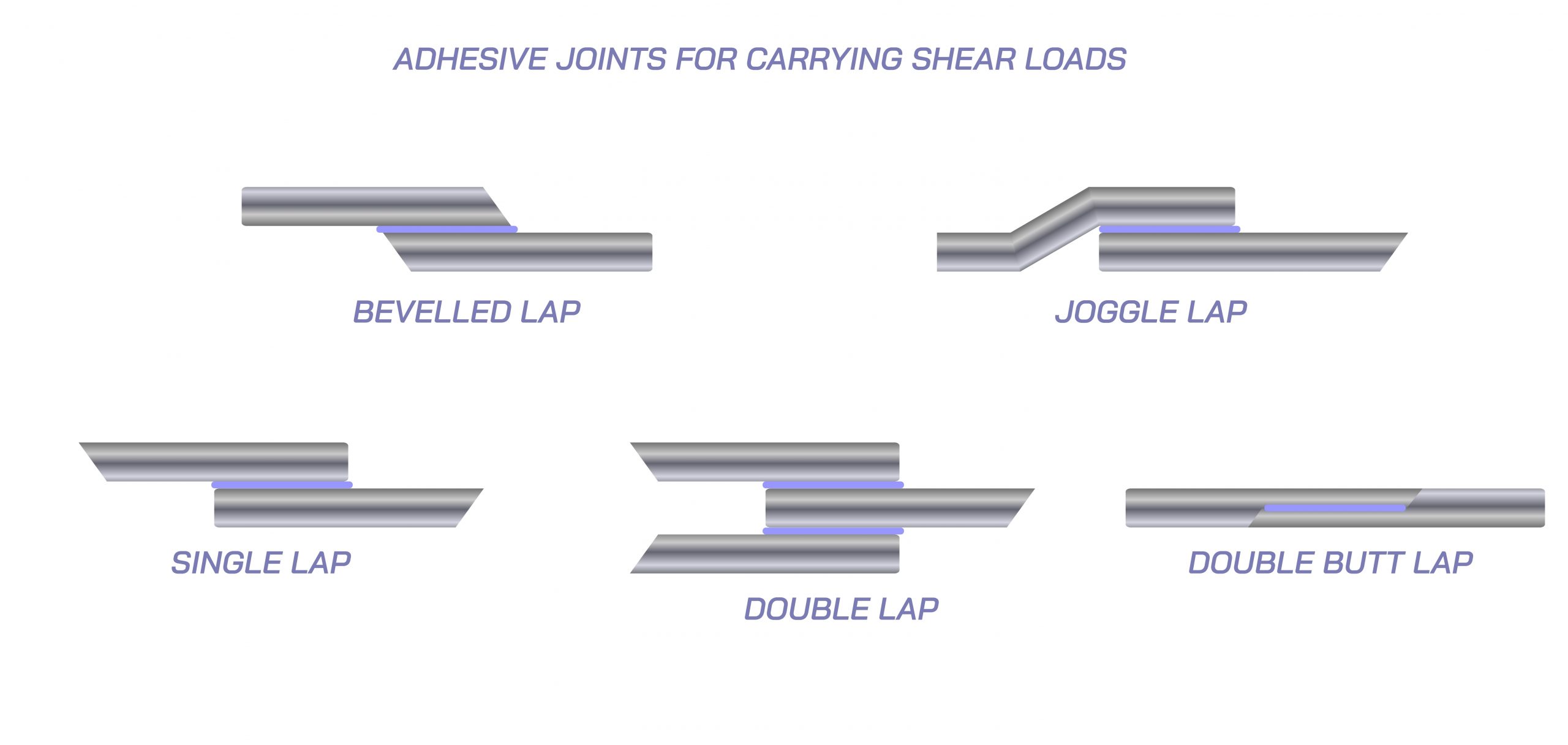
Shear testing loads the joint in the plane of the bond, the way two overlapped, glued surfaces resist sliding apart. Lap shear is the common configuration, with two overlapped specimens pulled in opposite directions until the joint fails. ASTM D3163 and D3164 cover Lap shear strength methods for different materials and joint types. The result is shear strength, reported as force per unit area, paired with the failure mode that says whether the adhesive or the interface gave way.
Peel Loads It the Other Way
Peel testing loads the joint at an angle, the way you lift the corner of a piece of tape and pull it back. It applies to tapes, films, flexible laminates, and trim attachments. ASTM D413, D903, and D1000 cover peel methods, and the result is peel strength, reported as force per unit width. Peel concentrates the load at the line where the surfaces separate rather than spreading it across the whole bond, which makes it the more revealing test for flexible attachments and the one more likely to expose a weak interface.
| Property | Shear | Peel |
|---|---|---|
| How it loads the bond | In the plane, surfaces slide | At an angle, surfaces separate |
| Reported as | Force per unit area | Force per unit width |
| Best at revealing | Bulk joint strength | A weak or contaminated interface |
| Common methods | ASTM D3163, D3164 | ASTM D413, D903, D1000 |
Why This Drives the Fix
The failure mode is what turns a test result into an action. Adhesive failure on a clean surface sends you to surface prep, contamination, or primer. Cohesive failure at a force below target sends you to the adhesive itself, its cure, or its thickness. Without that distinction, a failing bond is just a low number with no direction, and the team is left guessing at which variable to change. Reading the fracture is what makes the data useful.
Frequently Asked Questions
What does cohesive versus adhesive failure mean?
Cohesive failure is when the adhesive itself tears, leaving material on both surfaces, which usually indicates a sound bond at its strength limit. Adhesive failure is when the bond releases cleanly from one surface, which points to a surface preparation or interface problem.
What is shear adhesion testing?
Shear testing loads a bonded joint in the plane of the bond, the way overlapped glued surfaces resist sliding apart. It is measured by lap shear and related methods such as ASTM D3163 and D3164, and reports both strength and failure mode.
Why does peel often reveal problems shear does not?
Peel concentrates the load at the line where the surfaces separate rather than spreading it across the joint, so it is more likely to expose a weak or contaminated interface. That is why flexible attachments are usually tested in peel.
My bond passed on force but failed clean off one surface. Is that a problem?
A clean release is an adhesive failure, which can point to the interface even when the peak force looks acceptable. It is worth investigating surface preparation before the part goes into production.
Ghesquiere Plastic Testing, Inc. is an A2LA accredited testing laboratory in Harper Woods, MI, specializing in weathering and flammability testing for automotive materials. Request a quote at quotes@gptesting.com.