Shear Adhesion Testing Explained: ASTM D3163 and ASTM D3164
Shear adhesion testing measures the load a bonded joint carries when two adherends are pulled in opposite directions along the bond line. ASTM D3163 and ASTM D3164 both apply that idea to adhesively bonded plastic lap-shear joints under tension loading, and each one defines a different joint.
What Shear Adhesion Testing Measures
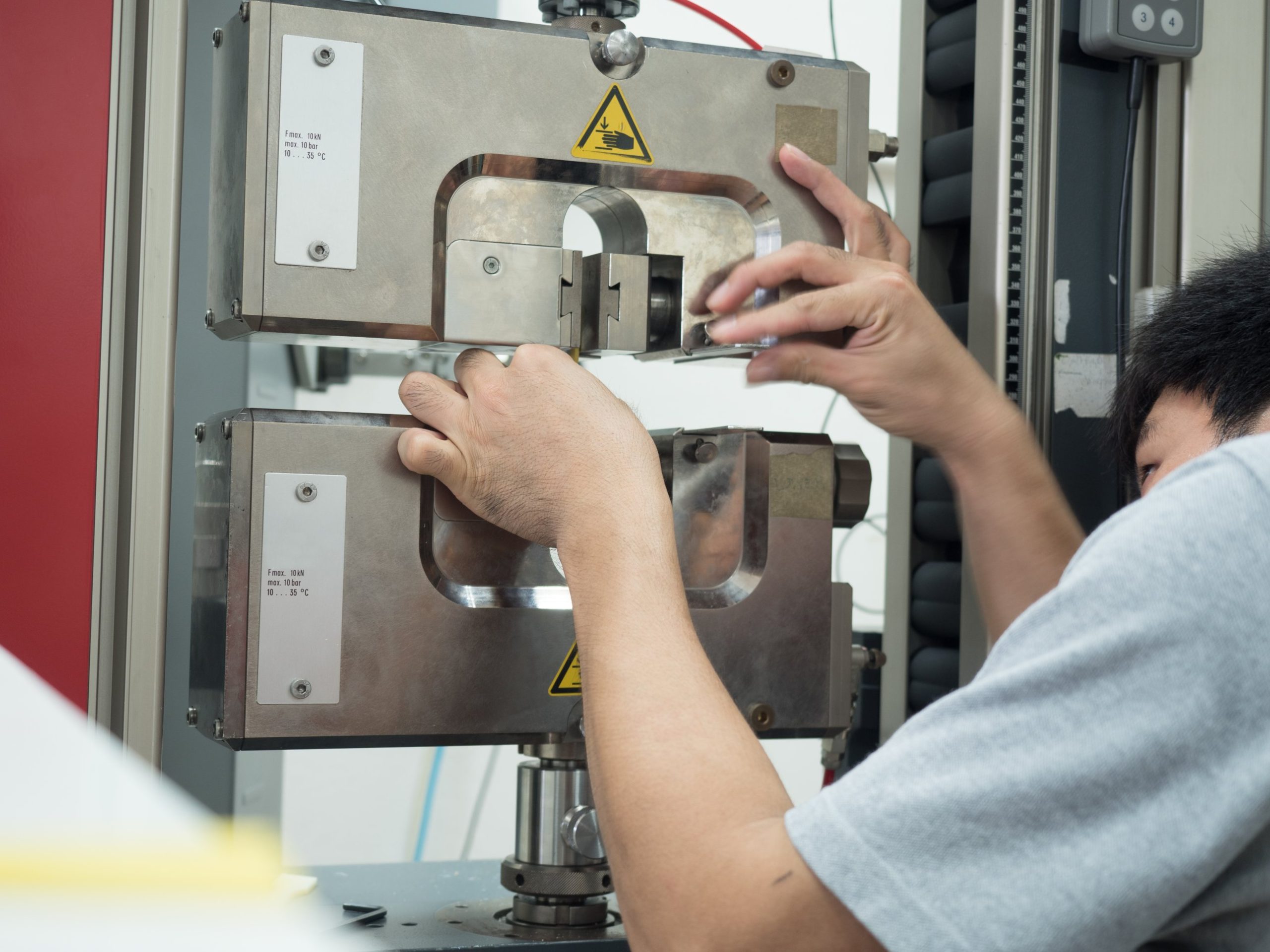
In a lap-shear test, two substrates overlap and are bonded together. A tensile machine pulls the free ends apart, which loads the adhesive layer in shear, and the result is a strength value for that joint. The value describes the whole system: the adhesive, the substrate, the surface preparation, and the bonded geometry.
Both ASTM standards state that their purpose is to give engineers a standard way to compare joints made from different substrates and adhesives. That makes the results useful for adhesive selection, for checking a surface treatment, and for comparing production lots. Because the result belongs to the joint, a number from one adhesive and substrate pairing does not carry over to another pairing.
Before samples are built, confirm which standard your drawing or material specification cites. The choice sets the joint type, and the joint type sets how the specimens are made.
ASTM D3163: Single-Lap Joints With Rigid Plastic Adherends
The full title of ASTM D3163 is Standard Test Method for Determining Strength of Adhesively Bonded Rigid Plastic Lap-Shear Joints in Shear by Tension Loading. ASTM describes it as extending the single-lap shear approach to rigid plastic adherends. ASTM also notes that the method is useful for generating comparative shear strength data for joints made from a number of plastics.
For a materials engineer, D3163 applies when the bond in question joins rigid plastic to rigid plastic. The data lets a team rank adhesives on one plastic, or compare several plastics bonded with the same adhesive, using a consistent test.
To keep results traceable, record the resin grade, any surface treatment, the adhesive, and the cure conditions for every specimen set. A lab can only report what the submission documents.
ASTM D3164: Lap-Shear Sandwich Joints
The full title of ASTM D3164 is Standard Test Method for Strength Properties of Adhesively Bonded Plastic Lap-Shear Sandwich Joints in Shear by Tension Loading. ASTM states that it complements ASTM D3163 and extends the lap-shear approach to joints that use plastic adherends.
The word sandwich in the title refers to a specific joint construction. Read the current edition of the standard for the exact construction and specimen dimensions before anyone builds samples, since a specimen built to the wrong configuration produces data that does not match the method.
If a customer specification cites D3164, send the specification number with the samples so the lab can match the request to the correct method and edition.
Choosing Between D3163 and D3164
The two methods share a loading mode (tension on a lap-shear joint) and a purpose (comparing adhesives and substrates). They differ in the joint they describe: D3163 addresses single-lap joints of rigid plastic adherends, and D3164 addresses lap-shear sandwich joints. Results from the two joint types are not interchangeable, so a program should pick one and hold to it across lots.
When a drawing cites one method, test to that method. When the specification is silent, ask the specification owner before samples are made, since changing the joint type later means rebuilding the specimens and repeating the work.
Both methods are on the GPTesting A2LA scope of accreditation (Certificate No. 0079.01), which you can confirm on our scope request page. If a program needs a shear method that is not on our scope, we run it with the same equipment, team, and methods, and the only difference is that the method is not listed on the scope.
Preparing a Shear Adhesion Test Request
A complete request names the method and any conditioning or environmental exposure that comes before the shear test. Exposure history matters because a bond that holds at initial qualification can behave differently after humidity or thermal cycling, which is why many programs pair shear data with exposure programs.
Our Testing Readiness Checklist lists the sample quantities and documentation to gather before shipping, and the Tests We Perform page shows the full set of accredited shear, tensile, and compression methods. If your program is still deciding which joint type to specify, a material testing consultation is a low-effort way to talk it through before samples are built.
To start a shear adhesion project, request a quote with your method, materials, and deadline.
Frequently Asked Questions
What is ASTM D3163?
ASTM D3163 is the standard test method for determining the strength of adhesively bonded rigid plastic lap-shear joints in shear by tension loading. It applies the single-lap shear approach to rigid plastic adherends. The result is a shear strength value for the bonded joint.
What is ASTM D3164?
ASTM D3164 is the standard test method for strength properties of adhesively bonded plastic lap-shear sandwich joints in shear by tension loading. It complements ASTM D3163 for single-lap-shear joints that use plastic adherends.
What is the difference between ASTM D3163 and ASTM D3164?
Both load a lap-shear joint in tension to compare adhesives and substrates. D3163 addresses single-lap joints of rigid plastic adherends, while D3164 addresses lap-shear sandwich joints. Use the method your drawing or specification cites, because results from the two joint types are not interchangeable.
What does a lap-shear test measure?
A lap-shear test pulls two overlapping bonded substrates apart so the adhesive layer carries load in shear. The result is the strength of that specific joint, which reflects the adhesive, the substrate, the surface preparation, and the joint geometry.
Are ASTM D3163 and D3164 on the GPTesting scope of accreditation?
Yes. Both methods are listed under Shear Strength and Shear Modulus on the GPTesting A2LA scope, Certificate No. 0079.01, under ISO/IEC 17025:2017. You can request a copy of the scope on the GPTesting website.
Ghesquiere Plastic Testing, Inc. is an A2LA accredited testing laboratory in Harper Woods, MI, specializing in weathering and flammability testing for automotive materials. Request a quote at quotes@gptesting.com.