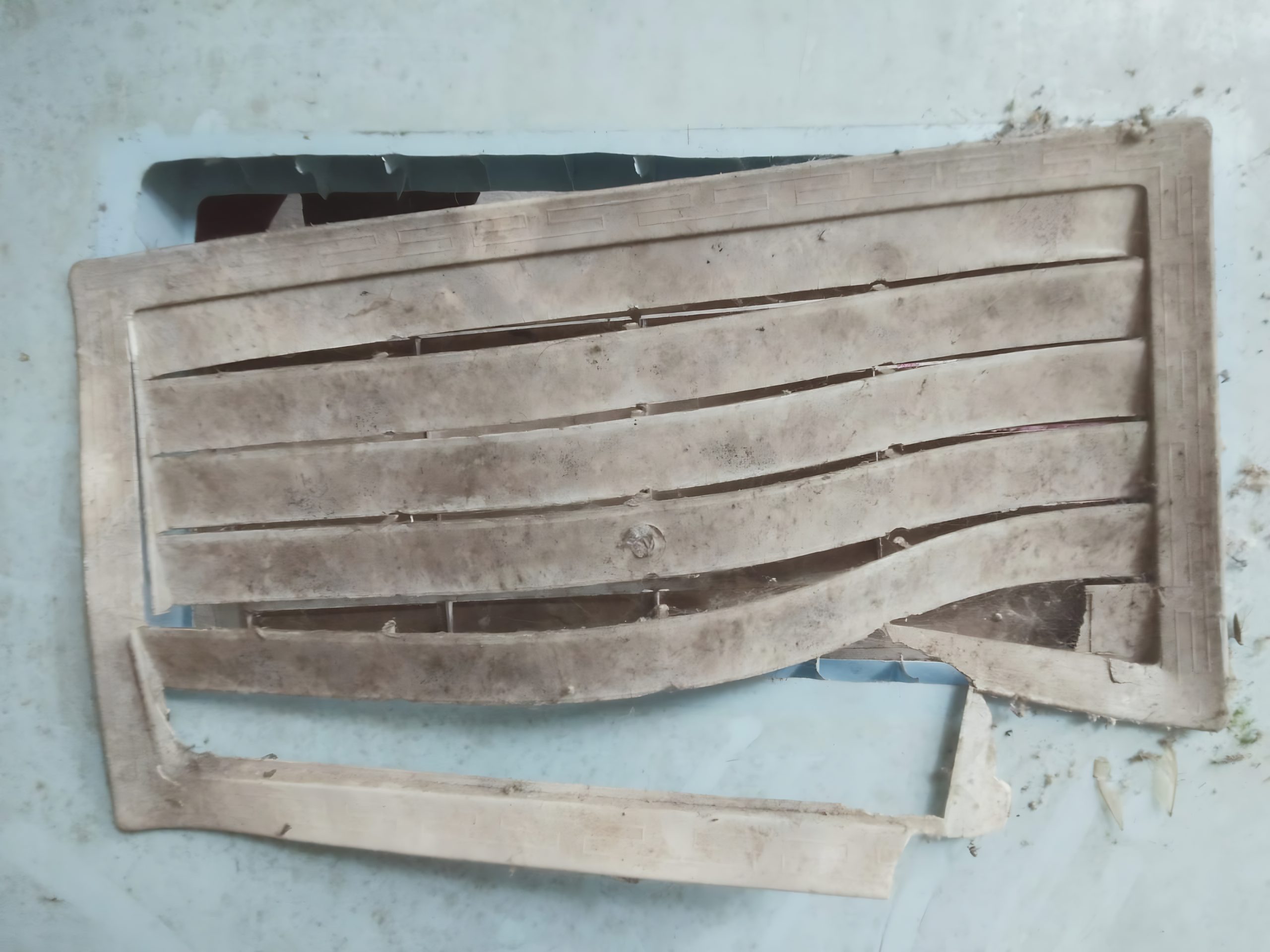
Dimensional Change Testing: Predicting Product Longevity
A material can meet every specification at the time of qualification and still fail six months after launch. The part warps after heat aging. The nylon component swells with moisture and no longer fits the assembly. The gasket loses thickness under compression and the seal leaks.
Dimensional stability testing measures how a material changes shape and size under real environmental stress. Run it before tooling is committed, and you have data that informs the design. Run it after launch, and you have a containment problem. GPTesting runs dimensional stability, warpage evaluation, water absorption, and thermomechanical analysis (TMA) within its accredited ISO/IEC 17025:2017 scope (A2LA Certificate No. 0079.01).
What dimensional stability testing actually measures
Dimensional stability testing measures how much a plastic or composite material changes in size or shape under defined environmental stress. That sounds abstract until you consider what it means in practice.
A part that exits the mold within tolerance but warps after heat aging is not a stable part. A gasket that loses thickness after compression will not maintain its seal. Our accredited dimensional stability and warpage test methods are used throughout material qualification and annual requalification programs.
Heat aging and linear dimensional change
Specimens are conditioned at elevated temperatures for defined periods, typically 72 to 1,000 hours. Dimensional measurements are taken before and after exposure and the percent change is calculated. ASTM D1204 covers linear dimensional changes for flexible plastic sheeting. ISO 2578, which governs time-temperature limits after prolonged heat exposure, is used within oven and exposure cycle programs to establish conditioning parameters for dimensional evaluation.
Thermomechanical analysis (TMA)
TMA measures dimensional change as a function of temperature with high precision, providing thermal expansion coefficients and softening behavior that static heat aging can’t resolve. This is particularly valuable for assemblies where coefficient of thermal expansion mismatch between joined materials is a concern. TMA is part of GPTesting’s Thermal Analysis capability alongside DSC and TGA.A useful way to think about CTE mismatch: two strips of metal bolted together that expand at different rates in the sun. The bolts constrain the movement, so stress builds at the joint instead of releasing. Polymer assemblies work the same way, with lower forces and longer timescales, but the stress concentration at the interface follows the same logic.
Moisture absorption and dimensional swelling
Hygroscopic polymers like nylon (PA6, PA66) absorb moisture from the environment, causing measurable swelling. This is quantified by water absorption testing, with dimensional measurements before and after conditioning confirming the physical impact on part geometry.
Changes of one to three percent in linear dimension are common in high-absorption grades. That’s enough to affect fit, function, and assembly clearances on a precision component.
Post-mold warpage
Warpage is measured by comparing part geometry to nominal design dimensions. OEM specifications define flatness tolerances or maximum allowable gap at defined measurement points. GPTesting evaluates warpage as part of initial qualification and after any processing parameter change.
Why early testing saves real money
Dimensional change testing is most valuable before tooling is committed. A material showing five percent linear shrinkage after heat aging can be accommodated in the tool design if the engineer knows before the tool is cut. If the data surfaces during end-of-line inspection after launch, the correction path is expensive. We describe this scenario in detail on our testing capabilities page under mechanical and physical property testing.
When to schedule dimensional change testing
Dimensional evaluation is needed at these points in a program:
- New material qualification, before tooling is committed
- Resin supplier change, even when the grade designation is identical
- Post-process change such as altered cycle time, temperature, or cooling configuration
- Annual requalification per OEM requirements
- Investigation of field returns where fit or seal failure is reported
Before submitting samples, use our Testing Readiness Checklist to confirm sample quantities, conditioning requirements, and documentation.
If dimensional drift has caught a program off guard, whether at tooling or after launch, it is worth a conversation before the next program starts.
Request a quote for dimensional stability testing at gptesting.com
What is dimensional stability testing for automotive plastics?
Dimensional stability testing measures how much a plastic component changes in size or shape under heat, humidity, or sustained load. It quantifies shrinkage, warpage, and expansion under defined conditioning and compares results to specification tolerances. Methods include ASTM D1204 for linear dimensional changes and thermomechanical analysis (TMA) for precise thermal expansion data.
Why do plastic automotive parts warp after molding?
Post-mold warpage results from residual stress in the injection molding process, differential cooling rates across the part, and material shrinkage that varies with wall thickness and fiber orientation. Heat aging can cause additional warpage in thermally unstable materials. Dimensional change testing quantifies and predicts this behavior before production launch.
What is TMA and when do I need it instead of standard heat aging?
TMA measures dimensional change as a function of temperature with high precision, providing thermal expansion coefficients and softening point data that static heat aging cannot resolve. It is used to evaluate coefficient of thermal expansion mismatch between joined materials, predict fit-up behavior under service temperatures, and screen materials for dimensional stability before tooling is committed.
How does moisture absorption affect dimensional stability in automotive plastics?
Hygroscopic polymers like nylon absorb moisture from the environment, causing measurable dimensional swelling. Changes of one to three percent in linear dimension are common in high-absorption grades and affect fit, function, and assembly clearances. Water absorption is measured per ASTM D570, and dimensional measurements confirm the physical impact.
When is it too late in the program to get useful data from dimensional stability testing?
Dimensional stability testing is most valuable before tooling is committed, so test data can inform tool compensation and material selection before changes become expensive. It should also be run when changing resin suppliers, after processing parameter changes, and for annual OEM requalification.