Fogging Testing for Automotive Interiors
Fogging testing measures how much volatile material an interior component releases when it heats up. The released volatile substances condense on the inside of the windshield as a haze. Interior components including, plastics, foams, and trim are tested for fogging to keep that condensation within specification.
What Fogging Is
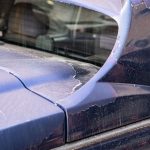
On a hot day, interior materials warm up and release small amounts of volatile compounds. Those compounds condense on cooler surfaces, most visibly the inside of the windshield, where they form a haze or film. That haze is fogging, and it affects both visibility and perceived quality.
Fogging testing measures the tendency of a material to produce that condensation, so interior components can be qualified to stay within the OEM limit before they go into a vehicle.
How Fogging Is Measured
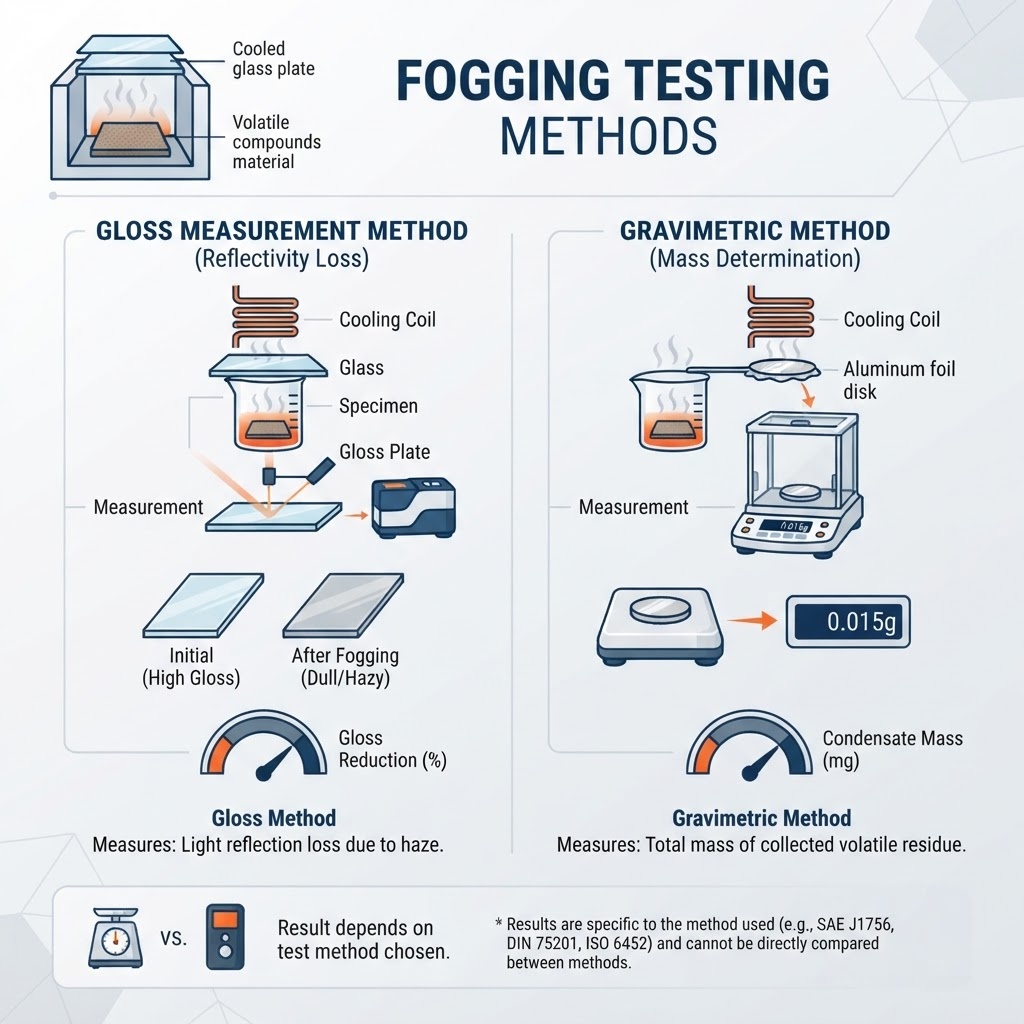
A specimen is heated in a controlled vessel while a cooled glass plate or aluminum sits above it to collect the condensate. The amount of fogging is measured either by the loss of gloss on a reflective plate or by the mass of condensate collected, depending on the method. The relevant methods include SAE J1756, DIN 75201, and ISO 6452.
The two measurement approaches describe fogging differently. Gloss reduction reads how much the condensate dulls a reflective surface. Gravimetric reads the actual mass of material that came off. A result only means something next to the method it was measured with, so a program reports against whichever one its OEM limit is written for.
| Approach | What it measures | Reported as |
|---|---|---|
| Gloss (photometric) | Loss of gloss on a reflective plate caused by the condensate | Percent gloss retained |
| Gravimetric (mass) | The mass of condensate collected | Milligrams of condensate |
Which Materials Get Tested
Fogging applies to all interior components: instrument panels, door trim, seating foams, headliners, adhesives, etc. It can also apply to components in the heating and cooling systems in the vehicle. If these components outgas volatiles they can also cause fogging to occur on the inside of the vehicle. Headlamps and Taillamps are also often tested to confirm that they will not outgas and cause fogging on the inside of the lenses over time. Exterior components are not tested for fogging, because the mechanism is specific to volatiles condensing inside the closed cabin.
Why a Formulation Change Can Reset the Clock
Fogging is driven by the volatile content of the material, not its mechanical design, which makes it unusually sensitive to formulation. A change in plasticizer, additive package, supplier, or even process can move a fogging result enough to push a previously qualified material out of limit. That is why a material that passed at launch may need requalification when the grade or supplier changes, and why fogging is worth confirming early rather than treating as settled. A late fogging surprise on an interior program is often traceable to a quiet formulation change upstream.
Frequently Asked Questions
What is fogging testing?
Fogging testing measures how much volatile material an interior automotive component releases when heated, the substances that condense as a haze on the inside of the windshield. It qualifies interior materials to stay within the OEM fogging limit.
What causes fogging in a vehicle?
Interior materials release small amounts of volatile compounds when they heat up. Those compounds condense on cooler surfaces like the inside of the windshield, forming a haze. Fogging testing measures a material’s tendency to produce that condensation.
Which methods are used for fogging testing?
Common methods include SAE J1756, DIN 75201, and ISO 6452. They measure fogging either by gloss reduction on a reflective plate or by the mass of condensate collected. The specification defines which method and limit apply.
Can a formulation change affect a fogging result?
Yes. Fogging depends on the volatile content of the material, so a change in additive, plasticizer, supplier, or process can move the result. A previously qualified material may need requalification when its grade or supplier changes.
Ghesquiere Plastic Testing, Inc. is an A2LA accredited testing laboratory in Harper Woods, MI, specializing in weathering and flammability testing for automotive materials. Request a quote at quotes@gptesting.com.