Gloss, Haze, and Texture: The Science of Visual Appeal
Your part passed every mechanical test on the list. Then the OEM auditor walked the line, held it up to the light, and called it a fail. A gloss reading of 5.0 when the spec said 2.5 to 4.0. That’s not a cosmetic issue. It’s a real rejection, and it happens more than most engineers expect.
GPTesting performs accredited gloss, haze, transmittance, and color evaluation in Harper Woods, Michigan under ISO/IEC 17025:2017 (A2LA Certificate No. 0079.01). Our full list of accredited surface and appearance test methods covers every evaluation OEMs require at qualification.
Surface appearance is a specification, not a preference
OEM materials engineers evaluate appearance attributes the same way they evaluate tensile strength or flammability: against defined acceptance ranges, with documented pass/fail criteria.
For interior surfaces, those ranges exist primarily to protect the driver. An instrument panel with too much gloss creates reflections in the windshield. A console that reads differently under showroom lighting versus daylight creates a perceived quality problem. For exterior components, appearance specifications protect long-term brand perception and are directly tied to coating durability.
None of this is subjective. A panel reading outside the specified range fails, regardless of how well it performs on every other test.
What gloss actually measures
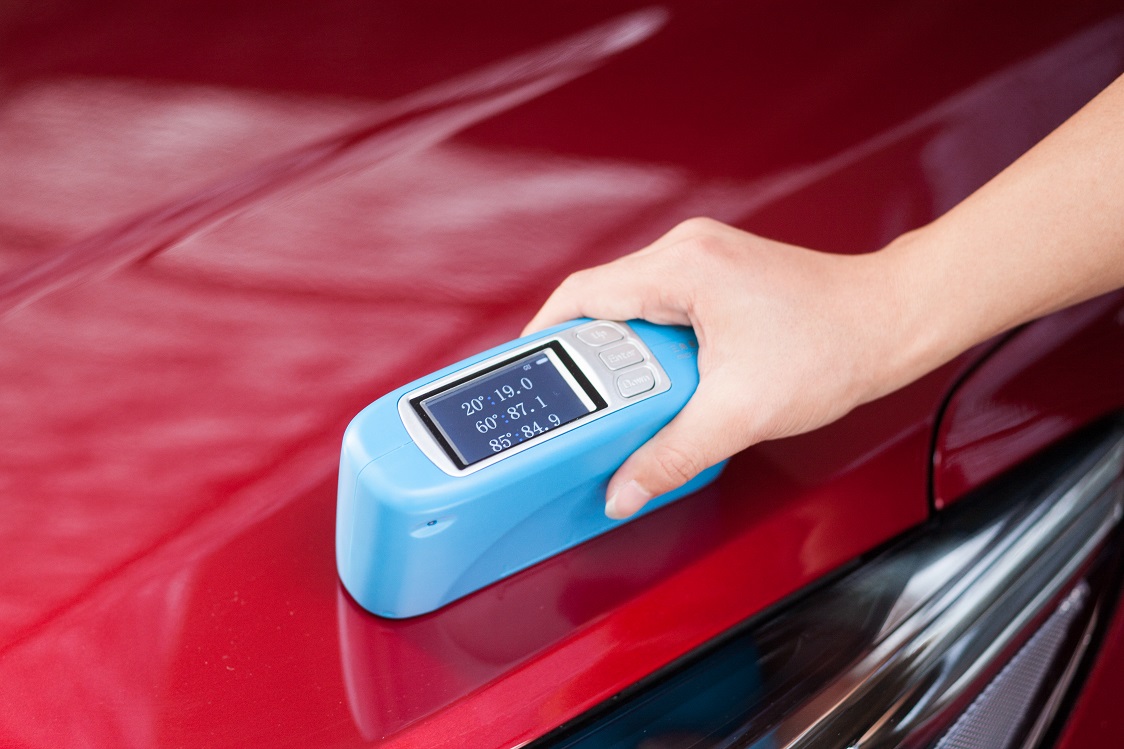
Gloss is the amount of light that reflects off a surface at a defined angle, reported in gloss units (GU). A glossmeter fires a controlled beam at the surface and measures how much comes straight back.
The angle matters. High-gloss surfaces are measured at 20 degrees. Mid-range finishes at 60 degrees. Low-gloss and matte surfaces at 85 degrees, where the instrument is more sensitive to subtle differences. Using the wrong geometry can mask real variation between samples, which creates problems at multi-supplier assemblies where consistency matters.
What haze reveals that gloss misses
Two surfaces can have the same gloss reading and still look completely different. Haze is why.
Haze measures the light that scatters just outside the specular reflection angle. A surface with high haze looks cloudy or milky even if its gloss number is in spec. It’s a common indicator of processing problems: wrong mold temperature, premature UV exposure, or additive incompatibilities that degrade the surface without showing up in the gloss measurement alone.
Transmittance: when light needs to pass through, not just bounce off
For transparent and translucent components, transmittance tells you how much light actually gets through the material. This matters for lenses, light pipes, instrument cluster covers, and any component where optical clarity is part of the design intent.
Transmittance is measured with the same equipment used for gloss and haze. It’s in our accredited scope and is often tested together with gloss and haze as part of a complete appearance package.
How texture gets evaluated
OEM appearance specs for texture don’t typically call for dimensional profilometry. Instead, grain depth, sharpness, and uniformity are evaluated by comparison to approved reference plaques or master samples. The question being answered is: does this part match the approved standard? Our testing capabilities page covers the full range of visual and instrumented evaluations we perform for post-exposure and initial property assessments.
These measurements work together
Change a coating formulation and you’ll often shift gloss and haze at the same time. Transmittance loss after UV exposure is an early warning sign that degradation is progressing. Color shift after weathering is almost always evaluated alongside gloss to give a complete picture of coating durability.
At GPTesting, surface evaluation is a package. We perform multi-angle gloss measurement, haze analysis, transmittance evaluation, and instrumented color assessment. Post-exposure evaluations can be run following any of our weathering and environmental exposure programs to confirm appearance compliance after accelerated aging.
When to run surface appearance testing
Three moments in a program make the most difference:
- At initial material qualification, before volume production begins
- After any processing change: mold temperature, cycle time, or resin lot
- Before OEM submission, to avoid audit surprises
Not sure if your samples are ready? Download our Testing Readiness Checklist before scheduling.
Request a quote for surface appearance testing at gptesting.com
What is gloss testing for automotive parts?
Gloss testing measures how much light a surface reflects at a defined angle, reported in gloss units (GU). OEMs specify gloss ranges for interior and exterior components to ensure visual consistency and control driver distraction from reflections. A part reading outside the specified range fails at OEM audit, regardless of mechanical performance. GPTesting runs multi-angle gloss measurement per ASTM D523 and OEM-specific methods in its accredited scope.
My coating gloss is in spec but it still looks milky or cloudy. What’s causing that?
Haze measures diffuse light scattered just outside the specular reflection angle. A high-haze surface looks milky or cloudy, which often signals processing defects, formulation incompatibilities, or early UV degradation. It’s a common OEM requirement for painted and coated components because it can indicate problems that gloss measurement alone won’t catch.
What is transmittance testing for automotive materials?
Transmittance testing measures the proportion of light passing through a translucent or transparent material. It’s required for lenses, light pipes, and instrument cluster covers where optical clarity is a specification requirement. GPTesting performs transmittance evaluation per ASTM D1003 as part of its accredited surface and appearance scope.
Do I need profilometry equipment to qualify surface texture for OEM submission?
Surface texture for OEM qualification is typically evaluated by comparison to approved reference plaques or master samples, confirming that grain depth, sharpness, and uniformity match the design intent. This approach doesn’t require dimensional profilometry and is the standard method for interior and exterior trim qualification programs.
How long does surface appearance testing take at an accredited lab?
Gloss, haze, transmittance, and color measurement can typically be completed within one to three business days after sample receipt. Post-exposure evaluations following weathering or environmental programs are scheduled as part of the overall exposure timeline and add no additional wait time after exposure concludes.