Paint Adhesion and Chip Resistance Testing for Automotive Coatings
Ghesquiere Plastic Testing, Inc. (GPTesting) | 20450 Harper Avenue, Harper Woods, MI 48225 | A2LA Accredited | Certificate No. 0079.01 | ISO/IEC 17025:2017 | info@gptesting.com | 313-885-3535 | gptesting.com
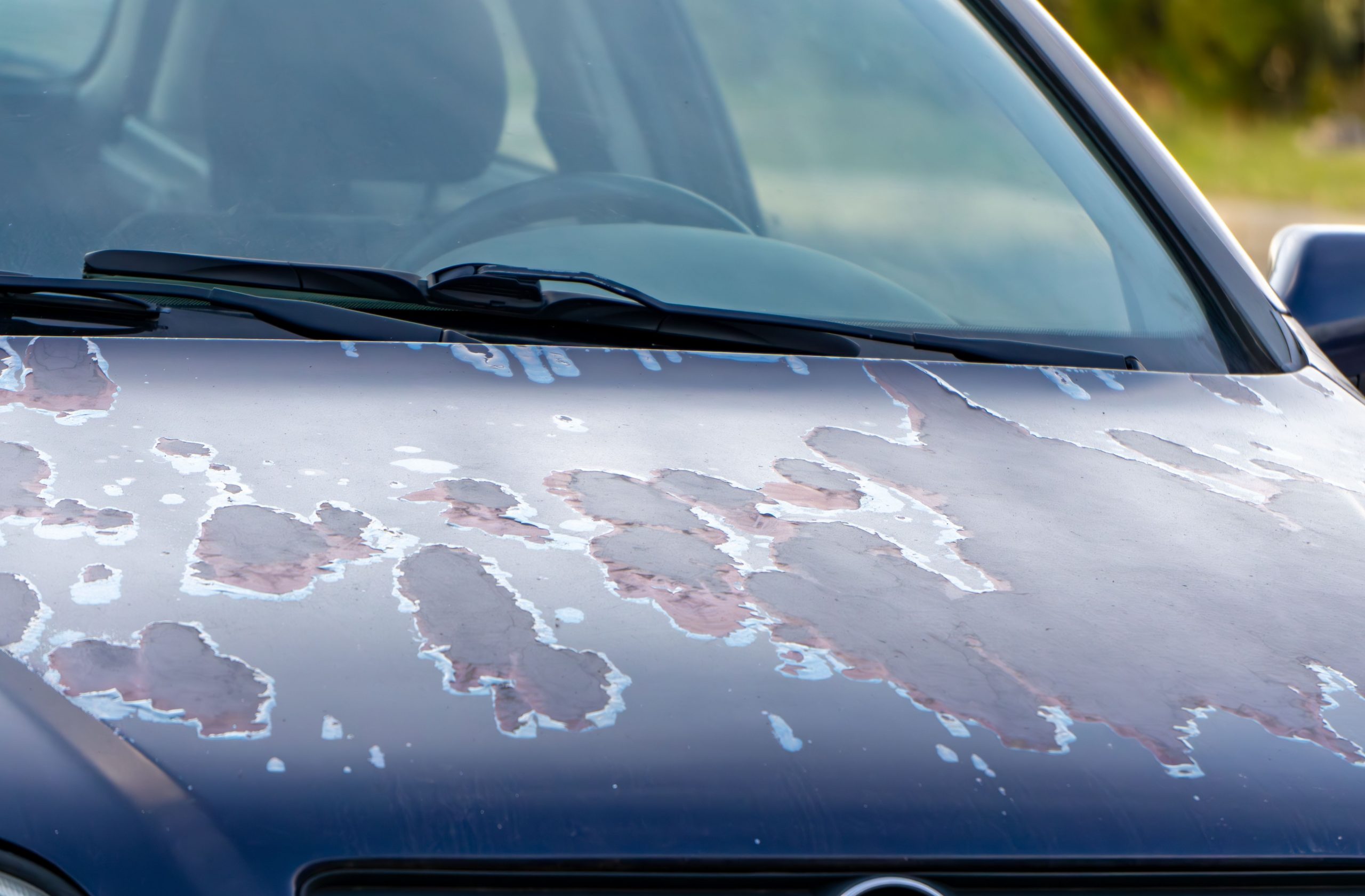
A coating that passes weathering, humidity, and salt spray testing can still fail after launch. The failure mode is delamination or chipping, and it shows up as a warranty claim within the first year of vehicle service. The question that follows is always the same: was adhesion tested after exposure, or just at initial qualification?
GPTesting runs paint adhesion testing per ASTM D3359, Ford FLTM BI 104-04, FLTM BI 106-01, GM GMW14333, GMW14829, GMW15891, GMW16745, and GMW16746, and Honda HES D6501, and chip resistance testing per ASTM D3170, SAE J400, and GMW14700, accredited under ISO/IEC 17025:2017 (A2LA Certificate No. 0079.01).
Why adhesion and chip resistance are separate from weathering
Weathering tests measure coating response to UV, heat, and moisture over extended exposure periods. They evaluate degradation mechanisms that develop slowly over months or years in service. Paint adhesion testing and chip resistance testing address a different set of questions: does the coating bond survive specific mechanical and environmental stresses, and does the coating film resist the sudden impact forces a vehicle encounters on the road every day?
Both sets of data are required for a complete OEM qualification submission. Neither substitutes for the other.
How paint adhesion testing works
The primary method in GPTesting’s accredited scope for paint adhesion is ASTM D3359, the tape adhesion test for coating films on substrates. Method B, the crosshatch test, uses a cutting tool or knife to make a lattice pattern of cuts through the coating to the substrate, applies pressure-sensitive tape to the grid, then removes the tape rapidly. The adhesion is rated on a 0B to 5B scale based on the percentage of coating removed.Adhesion testing is typically run as a post-exposure evaluation following weathering, humidity, salt spray, or thermal cycling programs. Coating adhesion after exposure is often more critical than initial adhesion, because the degradation mechanisms active during environmental exposure, particularly moisture uptake and UV chain scission, can weaken the coating-to-substrate bond without producing visible surface changes.
OEM-specific adhesion methods in GPTesting’s accredited scope include Ford FLTM BI 104-04 and FLTM BI 106-01, GM GMW14333, GMW14829, GMW15891, GMW16745, and GMW16746, and Honda HES D6501. See our Tests We Perform page to confirm the specific OEM adhesion method your program requires.
How chip resistance (gravelometer) testing works
Chip resistance testing uses a gravelometer, an instrument that projects water-worn road gravel at a coated test panel using a controlled air blast. The test reproduces the effect of gravel and road debris striking exposed painted surfaces during vehicle operation.
After exposure, adhesive tape removes any loose coating and the chip pattern is rated by counting chips by size category or by visual comparison to a Chipping Rating Standards. The gravelometer test evaluates the full coating system under impact, revealing whether chips initiate within the topcoat, at an intercoat interface, or at the coating-to-substrate bond. Topcoat-only failures point to film hardness or flexibility issues. Intercoat failures indicate a compatibility problem between layers. Substrate-level failures indicate an adhesion promoter or surface preparation deficiency.
SAE J400 and ASTM D3170 are the primary chip resistance standards in GPTesting’s accredited scope. GM GMW14700 is the OEM-specific method for General Motors programs. The test is often run at reduced temperature, typically -20 degrees Celsius, because coatings become more brittle in cold conditions where chip resistance requirements are most demanding.
When to schedule adhesion and chip resistance testing
Initial adhesion testing is required at the start of any coating qualification program and after every environmental exposure program where the specification calls for post-exposure adhesion evaluation. Chip resistance testing is required at initial qualification and when any variable in the coating system changes, including topcoat formulation, primer system, adhesion promoter, film thickness, or bake schedule.
Adhesion and chip resistance tests complete quickly relative to environmental exposure programs, typically within one to five business days of sample receipt. They are often scheduled in parallel with longer exposure programs so post-exposure adhesion data is ready when the exposure program concludes. Download our Testing Readiness Checklist to confirm sample quantities and documentation before submitting.
If post-exposure adhesion has ever revealed a bond problem that was not visible in the weathered coating appearance, that is the failure mode this test was designed to catch.
Request a quote for paint adhesion or chip resistance testing at gptesting.com
How is paint adhesion tested on automotive parts?
The primary method is ASTM D3359, the tape adhesion test. Method B uses a crosshatch cutting tool or knife to make a lattice of cuts through the coating to the substrate, applies pressure-sensitive tape to the grid, then removes the tape rapidly. The coating remaining is rated on a 0B to 5B scale. ISO 2409 is a related cross-cut method. OEM-specific adhesion tests including Ford FLTM BI 106-01 and GM GMW14829 use similar techniques with OEM-defined acceptance criteria. All are run in GPTesting’s accredited scope.
What is a gravelometer test for automotive coatings?
A gravelometer test projects water-worn road gravel at a coated test panel using a controlled air blast, simulating the impact of road debris on vehicle exterior surfaces. After exposure, adhesive tape removes any loose coating and the chip pattern is rated. SAE J400 and ASTM D3170 are the standard chip resistance methods. The test is typically run at reduced temperature because coating brittleness increases in cold conditions, where chip resistance requirements are most demanding.
What causes automotive coating chips and peeling?
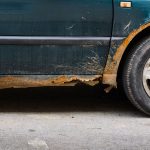
Chips and peeling result from inadequate adhesion between the coating system and the substrate, between coating layers, or from a coating film too brittle to absorb impact energy. Root causes include insufficient surface preparation, an adhesion promoter or primer not suited to the substrate, coating formulation incompatibility between layers, an incorrect bake schedule, or a topcoat with inadequate flexibility at low temperature. Adhesion testing and gravelometer testing identify which failure mode is present.
My Ford program requires FLTM BI 106-01. Is that in your accredited scope?
Ford requires paint adhesion testing per FLTM BI 104-04 and FLTM BI 106-01. GM references GMW14333, GMW14829, GMW15891, GMW16745, and GMW16746. Honda references HES D6501. For chip resistance, GM references GMW14700 and SAE J400 is widely referenced across North American OEM programs. GPTesting is A2LA accredited (Certificate No. 0079.01) for all of these methods.
How long does paint adhesion and chip resistance testing take?
Initial adhesion and chip resistance testing can typically be completed within one to five business days of sample receipt, depending on the number of specimens and required conditioning. When run as post-exposure evaluations following weathering or humidity programs, they are scheduled to complete when the exposure program ends, adding no additional time to the overall qualification timeline.